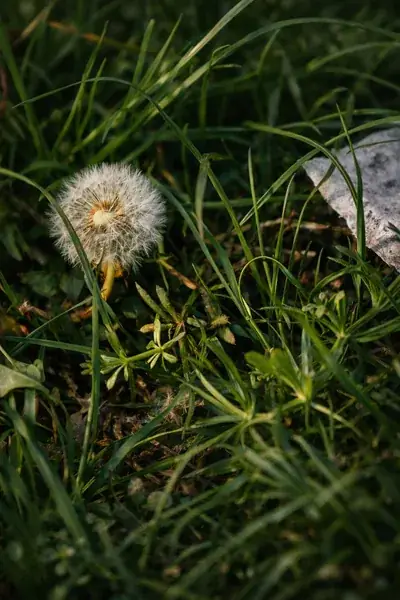
There is a moment in the dandelion's life that almost nobody notices. Not the cheerful yellow button of the flower, not the white globe of the clock we all blew on as children. The moment in between. When the flower has done its work, the petals have fallen, and the whole head has drawn itself closed again — tight, ribbed, held together like a hand around something precious. Three of them stood in the garden like this, backlit by the last of the April light, and I stopped.
The architecture of waiting
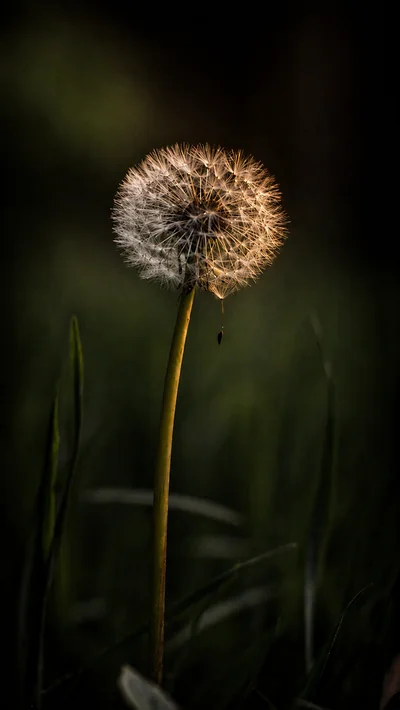
Get low, get close, and the closed dandelion seed head reveals something remarkable. The bracts — the stiff green scales that cup the base — have curled back slightly, like the collar of a coat pulled up against the weather. Above them, the head itself is dark and tightly fluted, each future seed folded in against its neighbour with an engineering precision that seems excessive for something we call a weed. The fine yellow tips of the emerging pappus — the silky threads that will eventually carry each seed on the breeze — catch the light at the top like the beginnings of a crown.
In warm amber backlight, the whole thing glows. The hairy stem, red-tinged, catches every fine filament of light. Droplets of moisture cling at the joints. It looks less like a garden weed and more like something from a natural history museum, under glass, lit with deliberate care.
"The dandelion doesn't need flattering light. Give it any light at all and it will find a way to use it."
What it is, and what it was called
The dandelion — Taraxacum officinale — is one of the most successful plants in Britain. It grows in every county, at every altitude, in almost every condition a British garden or verge can throw at it. It is not, despite the gardener's traditional view, a weed in any meaningful ecological sense. It is one of the first and most generous sources of nectar and pollen in the early spring, a lifeline for bees when little else is yet in flower.
In medieval Britain, the closed seed head — looking for all the world like a freshly tonsured monk — earned the plant the folk name Priest's Crown. It's one of a long list: blowball, witch's gowan, doon-head-clock, lion's tooth. Each name given by someone who actually looked. Who saw the thing in its different stages and reached for a word that matched what they were seeing. There is something quietly wonderful about that — centuries of ordinary people noticing exactly this.
The weed in the garden
These three grew at the edge of a lawn. No effort had been made to find them. No special habitat, no reserved meadow, no drive into the countryside. They were simply there, as dandelions always simply are, doing what dandelions do with the complete indifference to human opinion that is one of the plant's finer qualities.
The light was accidental too — the particular amber of late afternoon finding the particular gap in the fence at the particular moment the seed heads happened to be closed and still. A photograph like this is less about seeking out the extraordinary and more about being ready when the ordinary decides to show you something. Which it does, with some regularity, if you happen to be looking.
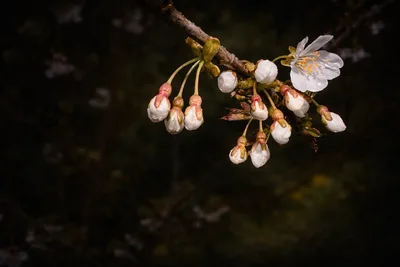
Britain's natural world works like this. It does not require effort or expedition. It requires attention. The cherry blossom in the park you walk past each morning. The dead nettle flowering in the wall. The dandelion in the lawn that closed itself at dusk and is waiting, with complete patience, for tomorrow's warmth to open it again. The magic, if you want to call it that, is not somewhere else. It is precisely here. It has always been precisely here.