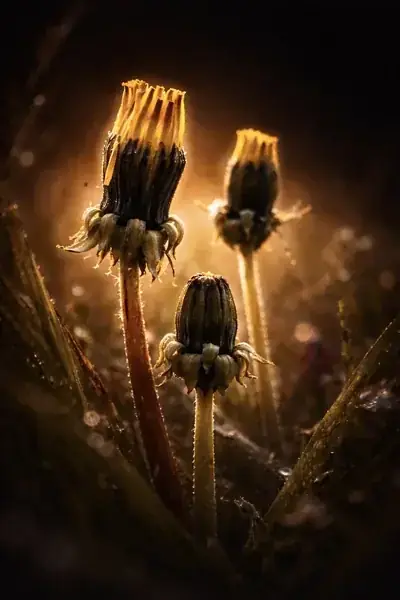
Evolution is seldom a straight line from A to B. In reality, it's a dandelion.
The common dandelion does not reproduce the way you might expect. It clones itself. Every seed that falls from the white clock is a genetic copy of the mother plant. From a plant's perspective, this is close to perfect. No risk. No waste. Just: flower, seed, spread. Repeat.
And yet it still produces flowers. Still makes nectar. Still develops pollen that, in most cases, goes nowhere. Apomictic dandelions in Britain still maintain the full apparatus of sexual reproduction — the petals, the nectar glands, the pollen, most of it non-functional — even though they do not strictly need any of it. An evolutionary relict. The dandelion kept the old equipment. It is still running the old code.
This is not strategy. What it is, is a plant caught in the middle of an evolutionary choice it never quite got pressured into making.
The recent revolution
The dandelion did not always reproduce this way. In central Asia, sexual diploid forms still exist. But somewhere in the recent past — geologically speaking, just yesterday — some dandelions became polyploid. Triploid. Sexual reproduction simply stopped working. What evolved instead was apomixis. A workaround. A revolution.
This happened recently enough that apomictic dandelions are still creating new lineages. Even now, occasionally, a triploid apomictic dandelion produces viable pollen that backcrosses with a sexual diploid female. When this happens, something new is born. The system is still actively negotiating between asexuality and sex.
What it maintains
None of it is strictly needed. Cloning is so efficient that the flowers, the nectar, the pollen are all surplus. And yet they persist.
The genes are still there. Turning them off would cost evolutionary energy. Maintaining them costs almost nothing. Genetic inertia.
The occasional backcross — the rare moment when new genetic material enters the population — buys the dandelion something else: resilience. Taking on new DNA, every once in a long while, is worth the inefficiency of keeping the old machinery running. The inefficiency is the insurance.
What it feeds
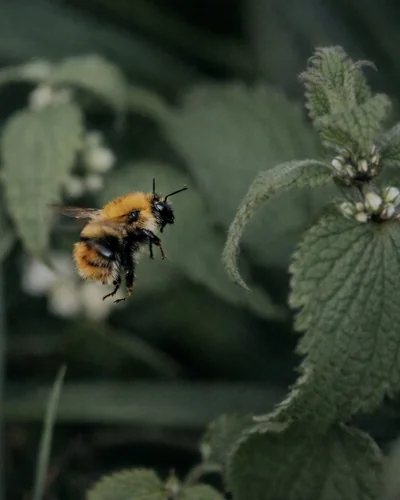
In late March, a queen bumble bee emerges from the earth where she has endured a cold hibernation. She is starving. She needs nectar near where she wakes, or she will not survive to lay eggs. To start a colony. To fuel the summer.
The dandelion is waiting. It flowers early. It flowers abundantly. A single plant produces hundreds of florets, each one leaking out that modest, accidental nectar. In that narrow window in March, a meadow full of dandelions becomes a food source so reliable and so available that it becomes essential. The queen lands. She works the flower slowly. She takes what it offers. And it is enough. It keeps her alive. It fuels her flight. It allows her to lay the first eggs of the season. Those eggs become workers. Those workers pollinate everything else that flowers later. The whole summer food web hangs on that moment.
The dandelion does not know this. It does not care. It happens to be exactly what keeps everything else alive.
The knot
This is what evolution actually looks like.
"It looks like a knot. Messy. Inefficient. Contradictory. And absolutely, stubbornly alive."
The dandelion is doing this now in a Britain transformed. The ancient meadows have been turned over for more profitable land. The wildflower margins have been sprayed. We tidy it into the cracks, then reach for the spray bottle when it pushes through.
And yet it persists. In the cracks of the pavement. In the corners of fields. In the verges we haven't quite destroyed. Still cloning itself. Still producing nectar. Still occasionally backcrossing, creating new genetic combinations that might, just possibly, be better equipped for whatever comes next.
That incomplete evolutionary choice — that refusal to resolve — is what allows it to survive us.
Evolution is seldom a straight line from A to B. In reality, it's a dandelion. Messy. Unfinished. Still negotiating what it is.
And everything depends on it staying that way.