It is the first warm morning of spring. Somewhere in the parts of Britain where the spring sun scalpels its way through enough cloud to cast its light — a bank above a hedgerow, the loose earth behind a garden shed, a south-facing slope where the sun has been doing its slow work for a fortnight — the soil shifts. A queen bumble bee, alone underground, is roused by the introduction of a glowing warmth, pushing her way out into a light not seen since last July.
She has not eaten in eight months. She is carrying, inside her body, the entire next generation.
She emerges
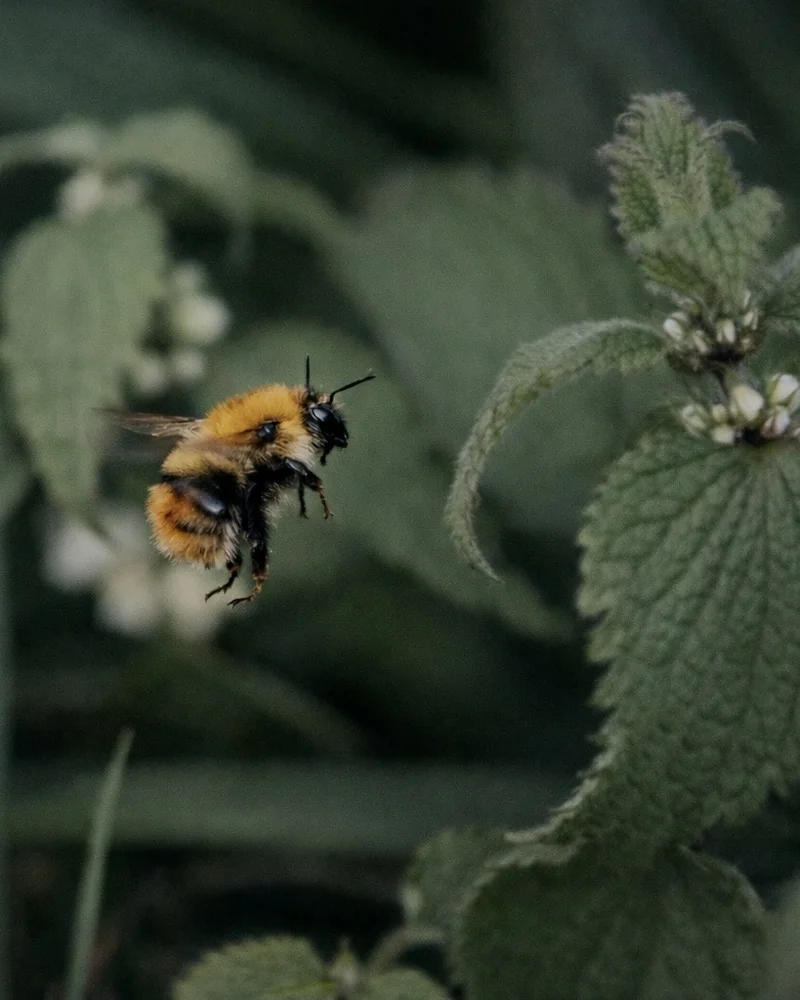
She comes up slower than she will move by May. The flight muscles that will one day carry her across a clover field are still cold enough to seize, and so she does what her kind have done for longer than Britain has been Britain — she climbs a blade of grass, turns her furred back to the sun, and shivers herself warm. For several long minutes she is ungainly, half-awake, drying her wings in the slow amber of a morning that has only just begun to mean something.
Then she flies. Heavily. Close to the ground. In widening circles around the place the earth gave her back.
She is looking for food. Three or four days, perhaps a week if the weather turns generous, before her reserves run clean out.
Two hundred metres
That is the circle she can work in her first week, before the cold and her own hunger draw her back down into the dark. Inside it, at this time of year, there are only a handful of things in flower.
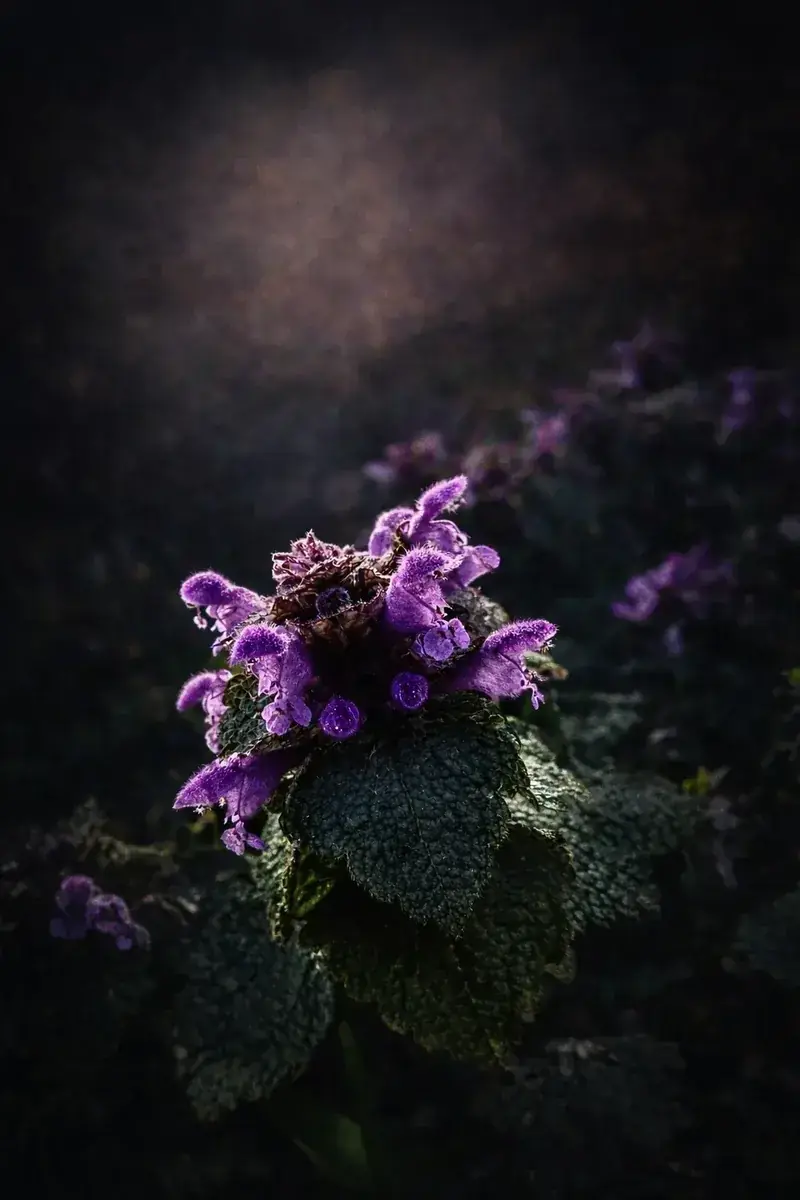
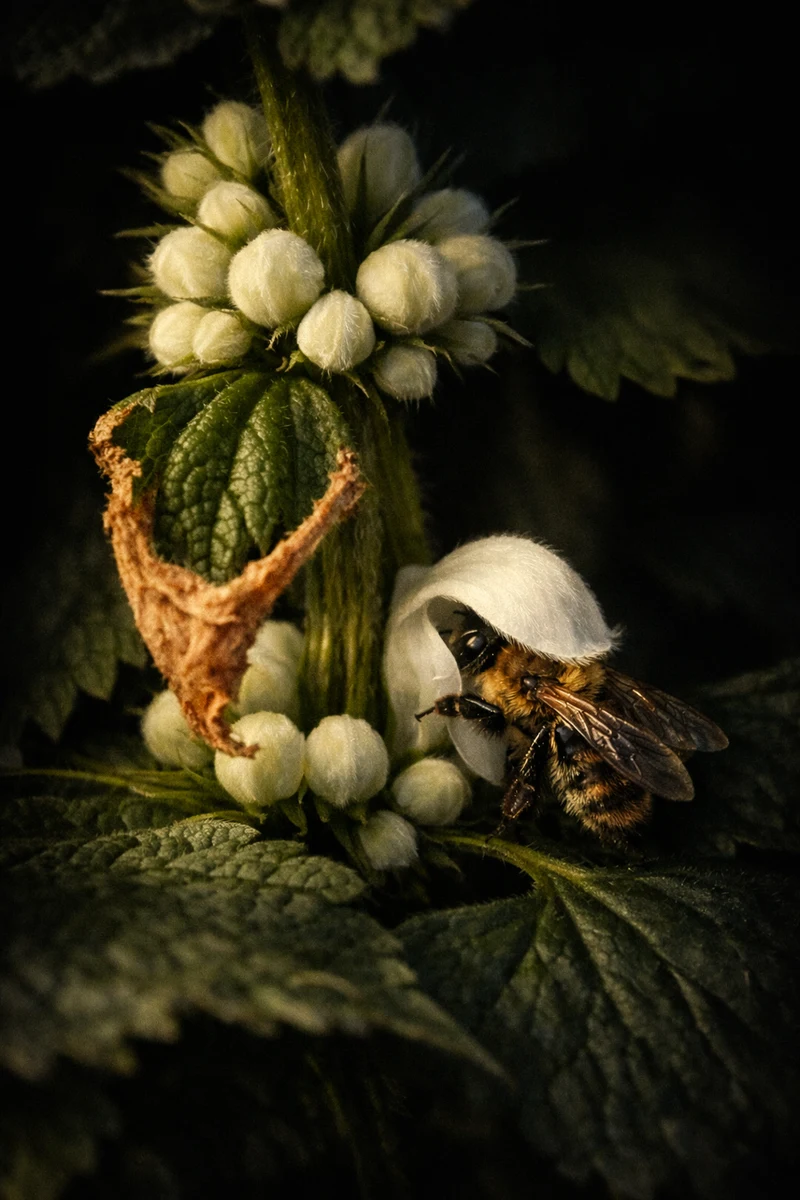
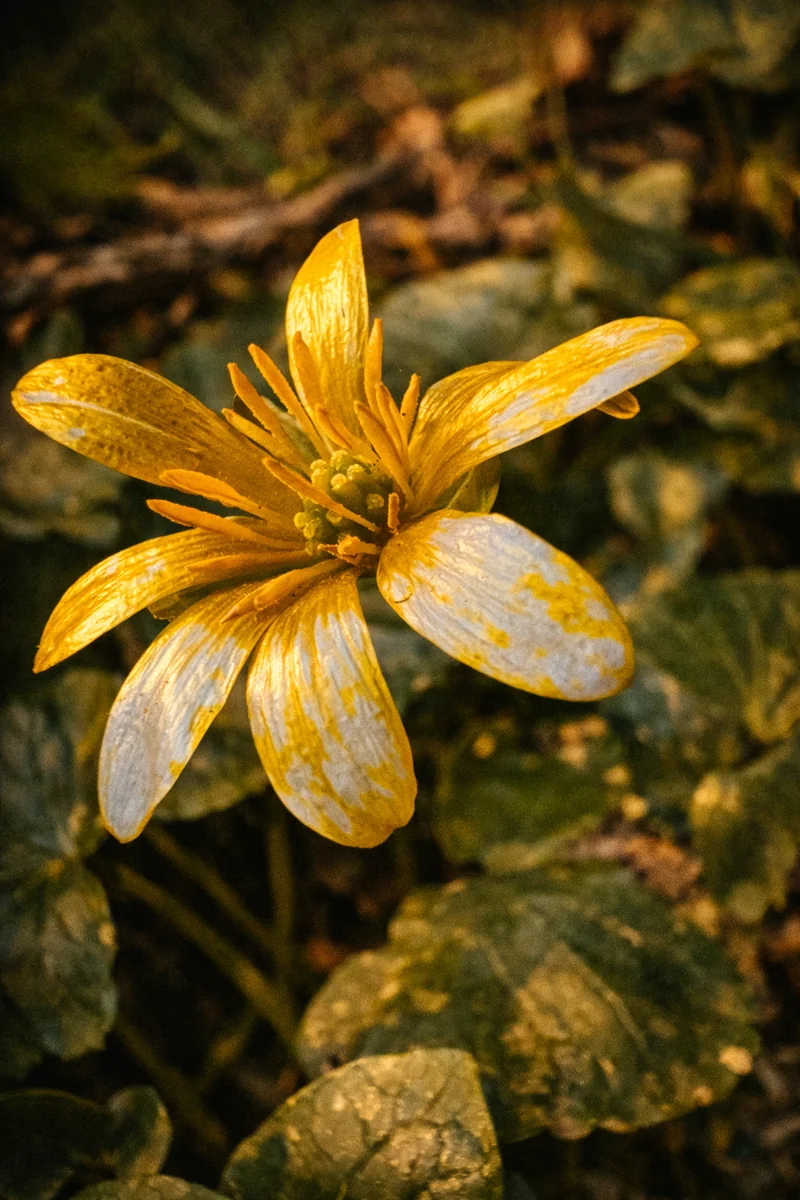
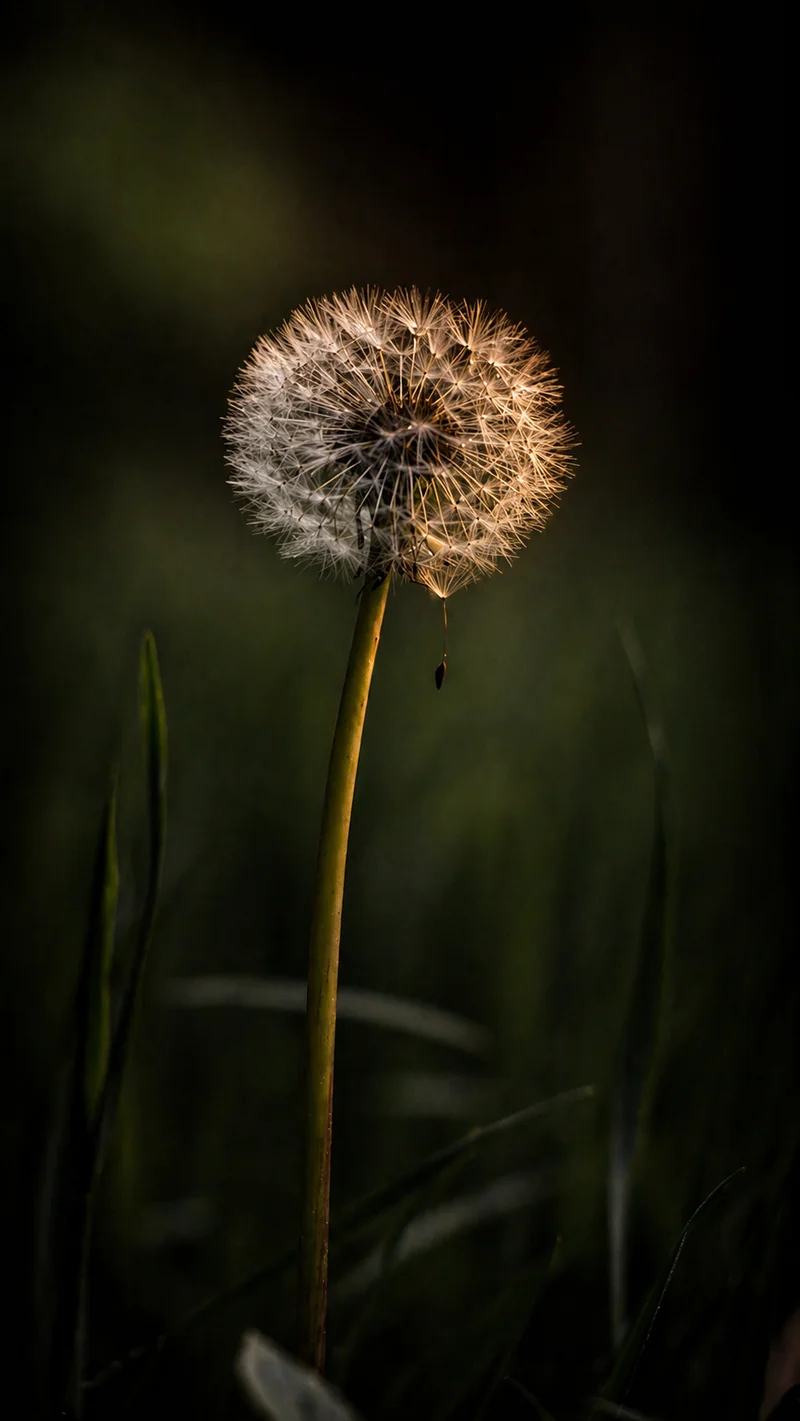
Dandelions. White dead-nettle. Lesser celandine on the damp banks, opening with the sun. Willow catkins, where there is a willow to oblige. Lungwort, in the older gardens, where nobody has been in too much of a hurry. That is most of it.
On an unhurried verge, in a garden where the strimmer has stayed in the shed, on a lane the council has not yet got around to tidying, there will be enough. She will drink. She will warm. She will find a disused mouse hole, a tussock of grass, a forgotten cavity beneath a shed, and begin.
Where the dandelions have been sprayed, the dead-nettle pulled up as a weed, and the verges cut short for the look of the thing, there will not be.
What conspires against her
A great tit, precise and fast. A magpie, striking mid-flight. A cold snap that will freeze her wings stiff. A late snow. A road she has to cross. Pesticide residue on the flowers she lands on. Nosema, perhaps contracted before hibernation. Eight months underground and a body that is not what it was.
She is, by any reasonable measure, fragile.
The nest, and what follows it
If she finds what she needs, she chooses a site and works wax from her own body, shaping it into a small thimble of a cell. She lays her first eggs, settles over them like a bird on a nest, and keeps them at the temperature a developing bee requires by shivering her flight muscles, for days at a time, to make her own heat. Beside her, she builds a second wax pot and fills it with pollen and nectar, a larder for the hours she cannot leave.
Three weeks later, the first workers hatch. Small. Furious with hunger. But there.
They take up the foraging. She does not leave the nest again. By July there are a few hundred of them. By late summer she produces the next year’s queens, and a few males to meet them, and the work is done — the quiet economy that makes the bumble bee Britain’s most consequential worker. The new queens mate, feed heavily on the last of the flowers, and go looking for a bank to dig into. The old queen dies quietly in her own nest, the colony collapsing around her. She was never going to see another spring.
If she does not find what she needs, she is dead on a lawn somewhere within four days, still carrying the eggs.
She is, right now, climbing a blade of grass. She does not know whether the ground around her is flourishing or devoid of resources. The difference may only be three weeks of hesitation with the mower, allowing nature to run its course a little longer.
Long live the weeds and the wilderness yet.
— Gerard Manley Hopkins, ‘Inversnaid’