It's been there all along. Growing at the edge of the path, in the rough grass by the wall, along the scrubby margin of the car park you've walked through a hundred times without a second glance. Small, purple, a little dishevelled. Most people, if they notice it at all, assume it's a weed and move on. They're not wrong, exactly. But they're missing something rather good.
Dead — but very much alive
The name needs some explanation. Red dead nettle — Lamium purpureum — is so called because it looks, at a glance, a bit like a stinging nettle but has no sting. "Dead" in the sense of harmless. It's not related to stinging nettles at all; it belongs to the mint family, which explains the square stem and the slightly aromatic smell if you crush a leaf. The Romans named the genus Lamium, probably from the Greek for throat — a reference to the tubular, open-mouthed shape of the flower. All of which is a lot of history for something most people kick out of their borders without a second thought.
In fact, it's a native British wildflower with serious ecological credentials. Those small purple flowers are among the first of the year — blooming in February, sometimes January in a mild winter, reliably by March, often before even the daffodil has stirred. Which makes it one of the very first nectar sources available to bumblebee queens emerging from hibernation. Hungry, cold, looking for energy before they've established a colony. The red dead nettle, quietly getting on with it in the corner of someone's garden, may well be saving lives.
"Most people kick it out of their borders without a second thought. The bumblebees disagree."
A plant that doesn't ask for much
Part of what makes the red dead nettle so easy to overlook is precisely what makes it remarkable: it will grow absolutely anywhere. Disturbed ground, roadsides, the edge of a field, a neglected corner of a garden. It doesn't need rich soil or good light or careful tending. It just turns up, gets going, and gets on with providing for whatever insects happen to be around.
The leaves are almost as interesting as the flowers — dark green, heavily textured, softly hairy, with a purple tinge that deepens as you get closer to the flowering head. In good light, that texture is extraordinary. Under a macro lens or with a long focal length, it looks almost architectural. Less like a garden weed and more like something you'd find illustrated in a Victorian botanical encyclopaedia under a name that required three separate etymological footnotes.
What it actually looks like, close up
Here's the thing about the red dead nettle: you have to get down low. Stand up and look down at it, and it's a forgettable smudge of purple in the grass. Get your camera — or just your face — down to soil level, and something different comes into view. The flowers cluster in whorls around the stem. Each one is a small hooded tube, the upper lip arching over like a tiny awning, the lower lip spotted and marked in a way that guides insects inward. There's real structure here, real elegance, if you're willing to look.
The purple-flushed leaves form a ruff around each whorl of flowers. Taken as a whole, the plant has a kind of dark, jewel-like quality — nothing like the throwaway thing it's treated as. It photographs beautifully against a dark background, where the purple really opens up and you start to see why purpureum felt like the right name to whoever named it.
Where to find one
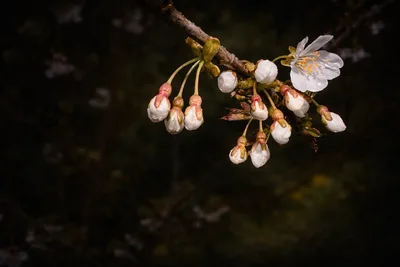
Everywhere. That's the honest answer. Once you start noticing red dead nettle, you will see it constantly — hedgerow bases, pavement cracks, allotment edges, garden borders where it's seeded itself uninvited. It tends to peak in early spring and then again in autumn, but in mild years it barely stops flowering at all. One of the plants that quietly keeps Britain going through the leaner months, providing for things that need providing for, asking for nothing in return except to be left alone. The cherry blossom gets all the attention, but this is what the bees are actually grateful for.
Which seems like a reasonable enough deal to me. The bumble bee, for what it is worth, has never complained about the terms.