There is a sound a bluebell wood makes that isn't quite a sound. You step in off the path and the temperature drops by a degree. The air changes. The light — whatever the light was doing outside — stops doing it and starts doing something else. And then the floor, which was brown a minute ago, is blue. Not a painted blue, not a decorative blue. A blue that the ground itself appears to be generating, as if the earth in this particular corner of this particular island has decided, for a few weeks a year, to glow.
This is Hyacinthoides non-scripta. The native British bluebell. Over half the bluebells in the world grow on these islands, which is the kind of statistic that stops you for a moment if you let it. Half the world's bluebells. Here. In the wood at the end of the road, in the lane behind the pub, in the little triangle of trees you've walked past every April of your life without quite realising what was happening at your feet.
The ground that remembers
Get close to one and the geometry does something to you. Each stem arches over at the top, drooping heavy with flowers the way a harebell droops, the way a listening person leans in. Six petals to each flower, curled back at the tips like the lip of a cup. A scent that doesn't travel far — you have to bend down to meet it — but when you do, it smells faintly green and faintly sweet, the way something old and living smells when it's in no hurry to announce itself.
What you are standing in, when you are standing in a proper bluebell wood, is time. Bluebells are one of the most reliable indicators in British botany that a wood is ancient woodland — meaning it has been continuously wooded since at least 1600. They spread at a rate of roughly a metre a century through leaf litter and shade. A dense carpet of native bluebells isn't a garden feature. It is a four-hundred-year-old conversation between the soil, the trees, and the slow march of a bulb that has never been in a hurry.
You cannot fake this. You cannot plant it. A bluebell wood is something that has to happen on its own, in a place the machines never came — and, increasingly, in a place the Spanish bluebell hasn't yet reached.
"A bluebell wood is not a place you visit. It is a place you sit down in."
The light of the Pink Moon
This particular bluebell opened under a full moon. Not any full moon — the Paschal Full Moon of early April, the one that decides where Easter falls each year and in the old English calendar carries a lovelier name still: the Pink Moon. Named not for its colour but for the moss phlox that blooms in its week, so that for a few nights the sky and the ground are both holding a quiet, coordinated event that almost nobody attends.
The light of the Pink Moon paints the details differently. Where daylight gives a bluebell its saturation, moonlight gives it its architecture. The curl of the petal becomes a line. The stem becomes an ink mark. The blue — which by day is a bright, almost aggressive colour — turns into something closer to porcelain. Pale, still, held. A colour that looks less like a flower and more like the memory of a flower, which is a strange thing to write down, but stand in a bluebell wood on the right kind of night and you'll know what it means.
Some of the flowers on this particular plant came through paler than the rest. A softer blue, almost white at the outer lip, the way bluebells occasionally appear in a patch of ancient wood where the old genetics have quietly gone their own way. It is still a native British bluebell. Still Hyacinthoides non-scripta. Just one of those versions that the country produces now and again without making a fuss about it — scarce, unadvertised, a little rarer than the rest. The Pink Moon caught exactly that pale edge and made something of it.
Where and when, in Britain
Bluebells flower from mid-April to late May, depending on latitude and how the winter has behaved. The southern counties usually tip first — Kent, Sussex, Hampshire — with the season moving north over the following fortnight. Scotland holds on latest, sometimes into early June in the higher woods. There is a window of perhaps three weeks in any given place when the wood is at full saturation, and then it starts to fade.
Where to find them is almost embarrassingly easy, and almost nobody does it properly. The trick is to avoid the car parks. The big advertised bluebell walks — the National Trust destinations, the headline woods — are worth seeing but they are not the real thing. The real thing is the wood at the end of your own lane. Every county in Britain has them: Warwickshire has the limestone woods around the Arden forest remnants, the Cotswolds have the beech hangers that colour the ground so completely you cannot see soil, the West Country has the steep oak coppices above the combes, Norfolk has the old hazel woods, the Welsh borders have the damp ancient valleys where nobody ever went with a plough. None of them are written up anywhere. All of them are yours for the cost of a walk.
The best time is an hour after dawn, before the wind gets up. Go on an overcast day if you can. A dry, bright midday is the worst light for bluebells — it flattens the blue and bleaches the flowers into a wash. You want soft light, still air, and no hurry. A bluebell wood is not a place you visit. It is a place you sit down in.
The older names
Before the Victorians settled on "bluebell" as the tidy standard English, the plant went under a scattering of older names that are worth keeping. Fairy flower and witches' thimble come from the old belief that the bells rang silently for the fairies and that hearing one ring was an omen of a death in the year. Cuckoo's boots, because the bluebells arrive when the cuckoo calls. Calverkeys and ringing bells in the west. Crow's toes in parts of Yorkshire. Wood hyacinth for those who wanted to sound a little grander.
Each name given by someone who actually looked. Who saw the thing in its proper light and reached for the word that matched what they were seeing. There is something quietly wonderful about that — a country that produced a plant so singular it needed a dozen names, most of which we've now forgotten for the sake of efficiency.
The native bluebell is protected under the Wildlife and Countryside Act of 1981. It is illegal to dig up a wild bulb, and illegal to trade in them. This is not a detail to tuck away at the end of a post. It is the reason there are still bluebell woods in Britain. Without that protection, and without the patient refusal of certain small places to be ploughed up, the carpet would already be a memory.
The thing it asks of you
The bluebell is perhaps the most photographed wildflower on these islands, and the most poorly seen. It's a popular target for the early-spring listicle, the National Trust's homepage, the "ten best bluebell walks" slot in the weekend supplement. None of that is the flower's fault. The flower is doing what it has been doing for four hundred years in the same wood. It is the looking that has got careless.
Go when it's quiet. Go early, or go late. Go in soft light, or go under a Pink Moon if you happen to have one. Sit down next to them. The blue is different when you are at its level. The way the stems hold the flowers is different. The smell is different. The light between the flowers — the green shadow the woodland canopy casts down through the new leaves onto a living, breathing blue floor — is the actual subject. Not the individual bluebell. The room the bluebells make.
If you take one thing from this, take that. A bluebell wood is a room. You do not photograph a room from the doorway, and you do not see a bluebell wood by walking through it. You go in. You sit down. You let your eyes adjust. You wait for the wood to stop noticing you. And then — some of the time, if the country is being generous — the blue starts to move.
The bluebells will be back next April, and the April after that, and the April after that, for as long as Britain keeps the quiet corners quiet. Which is the thing this island is still, despite everything, very good at — the unshowy version of the great things, the floor that turns blue, the wood that hasn't been touched in four hundred years, the flower that only grows where nobody has been in a hurry.
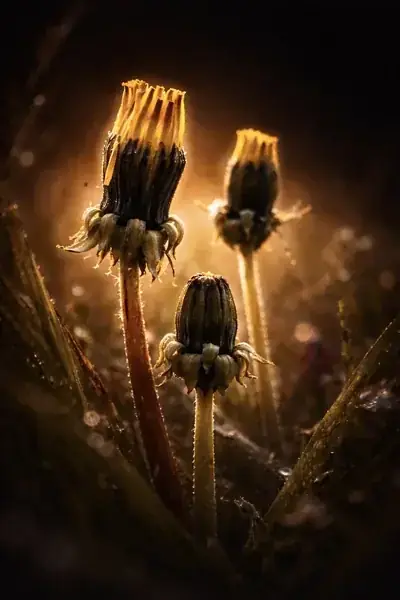
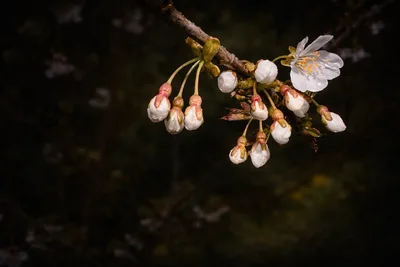
Go and find yours. It's nearer than you think. The cherry blossom is almost done. The dandelion is closing itself at dusk. And the bluebell wood is opening, quietly, somewhere nearby, waiting for you to arrive.