The rose: Britain's most complicated love affair
The rose has been Britain's flower for a thousand years. Shot on a rainy afternoon, and still extraordinary.
There's a category of British subject that sits somewhere between wildflower and garden flower — the rose scrambling through a hedgerow, the tulip in a cottage border, the things that started elsewhere and became so thoroughly ours that it's impossible now to imagine the country without them. This section is for those.
The rose has been growing in Britain since the Romans. The tulip arrived via the Ottomans and the Dutch and the particular obsession of eighteenth-century northern English weavers. Neither is native in any strict sense. Both are absolutely, unmistakably British. That's how it works here — the borrowed thing becomes the thing itself, given enough time and enough grey skies.
Each piece here is part natural history, part photography note, part argument for slowing down and looking at what's already in front of you. The best garden flower, photographed properly, is as interesting as anything in a national park.

The rose has been Britain's flower for a thousand years. Shot on a rainy afternoon, and still extraordinary.
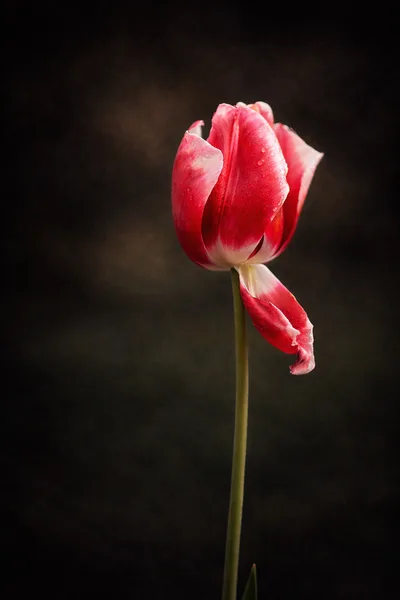
It isn't ours. Not really. But stand in front of one in March and it feels entirely, unmistakably, like home.