There is a particular Sunday in April when the country quietly agrees to believe in something. Not all of it. Not formally. But there is a softening in the way people speak about the weekend, an unwillingness to be quite so cynical for a few days, a willingness to put a chocolate egg in a child's hand and watch them solve the riddle of the foil. The churches fill a little more than they did last week. The supermarkets stack hot cross buns in walls. The hares, if you happen to be where hares are, do the strange business they do in the long grass at dusk. And outside — without anyone organising it, without a committee or a press release — the whole country comes back to life.
What the symbols actually are
The egg, the hare, the chick. We treat them as if they were always Christian, and they were not. The egg is older than any church in Britain, a symbol of the closed thing that becomes the open thing, of the small white stillness that turns out to have a life inside it. The hare — long before it was softened into a rabbit and softened again into a Cadbury's Bunny — was the companion animal of Eostre, the Anglo-Saxon goddess of the spring dawn, from whose name our word for the festival is taken. The chick is the egg keeping its promise.
When Christianity arrived in these islands it did not so much replace these things as agree with them. The empty tomb and the cracked shell are, after all, the same shape of story. Something was sealed. Something is no longer sealed. The thing inside was not what we thought. There is a reason the festival kept its old name and its old animals. They were already doing the work.
The resurrection nature simply does
You do not, in Britain, have to believe in anything in particular to feel what April is doing. The blackthorn has gone over and the hawthorn is coming. The first swallows are arriving, having flown the length of a continent on the strength of a memory. The bluebells, in the woods where bluebells live, are beginning to colour the floor in that impossible blue that no photograph has ever quite caught and no painter has ever quite mixed. The light is back in the evenings. The trees are doing the slow green explosion that they do every year and that every year still takes the breath away.
This is the resurrection that the country does without being asked. It does not require a sermon. It does not require belief. It simply happens, on schedule, in front of anyone who happens to be looking, year after year after year, and it has been doing so since long before any of us had a word for it.
A British Easter
The British Easter is, in the end, a quiet one. No parades. No fireworks. A long weekend, a roast lamb if there is the will for it, a walk somewhere green if the weather agrees, and the small and slightly silly pleasure of a chocolate egg eaten too quickly in the morning. The radio plays the choral evensong. Someone's grandmother sets the table. A child finds the last hidden egg behind the geraniums and is triumphant. None of it is loud. All of it is enough.
That is what the country is good at, and always has been: the unshowy version of the great things. We do not need a cathedral every time we want to feel the holy. The blackbird at six in the morning will do. The bluebell wood will do. The hot cross bun, split and buttered, on a kitchen table somewhere, will do. The resurrection — whichever one you happen to mean — is going on outside the window whether anyone is watching or not.
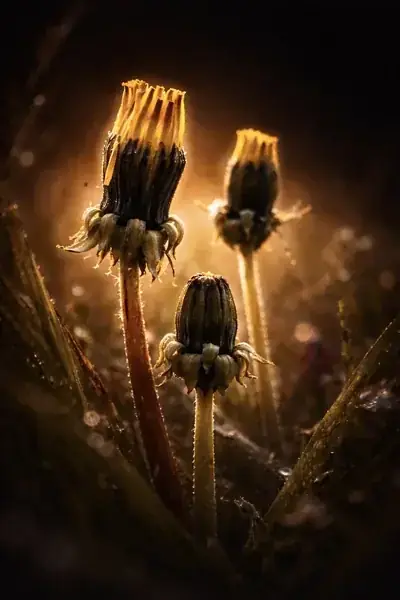
I find that, after all the long winter, I usually am. If you want to find it too, the cherry blossom is still out there right now — brief, very much on its own schedule. The dandelion in the garden is waiting for the warmth to open it again. You don't have to go far. You just have to look.
He is risen. And so am I.