The moon daisy that does not close
It is nearly dark, and the meadow is still white. Every daisy on the lawn closed hours ago — the small ones, the day's-eyes, folded down at dusk the way they always do. Not these. Knee-high on their rough stems, the oxeye daisies are still open. This is the meadow daisy that does not close.
Daisy comes from dægesēage — Old English for "day's eye" — given because that small flower opens with the light and shuts when the light goes. Chaucer watched it do exactly that. The oxeye holds open into the dark, pale enough to catch whatever light is left, and the people who named this one reached not for the sun but the moon. Moon daisy. Moon penny. A field of white coins still showing when everything else has gone to sleep.
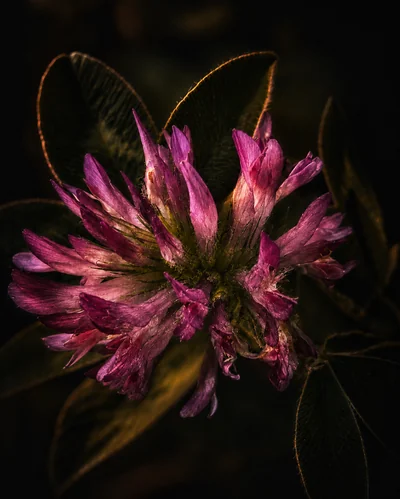
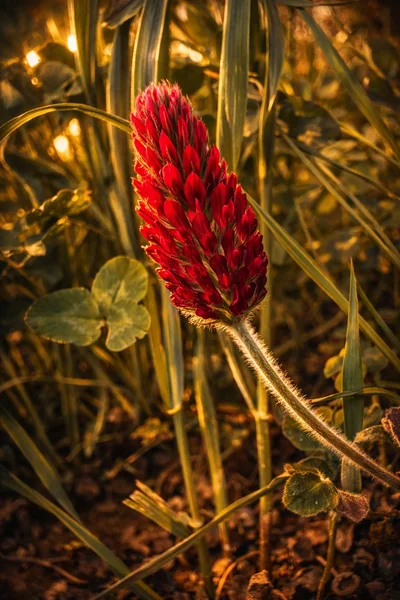
What works the head is what could not work the clover. The disc florets sit open and shallow; anything with a mouth can take what little is there. Hoverflies and small bees, beetles, the tatter-winged butterflies of late summer.
The oxeye's pollen runs oily and thin on protein — little sustenance, not a feast, which is why the bees that take it are mostly the generalists, topping up here and feeding properly elsewhere. But thin is not empty: the little protein it carries comes well-stocked with the essential amino acids a bee cannot make for itself. A small offering, openly given, does the job across a population of oxeye needing to be cross-pollinated, and provides enough for the foragers who are prepared to work for it.
A single plant of Leucanthemum vulgare can throw up as many as twenty-six thousand seeds in a season. The root grips, the stem roughens, the leaves carry a faint bitterness. The cow leaves it standing. The clover beside it gets cropped to the crown; the buttercup gets nibbled; the plantain trimmed. The daisy stands. And the plant, ignored, scatters an entire population at the cow's feet.
This is how it has colonised what other plants cannot. The verge of the motorway, where nothing is grazed but nothing is tended. The thin chalky soil at the edge of a downland path. The cracked margin of a car park. The oxeye daisy takes ground no one is fighting over and turns it, in a single summer, into a cover of white.
Children pulled the petals one by one — he loves me, he loves me not — and ended, by some quiet adjustment of conviction, on whichever answer the head had been kind enough to provide. It passed through country pharmacy too: leaves for coughs, poultices for bruises, washes for tired eyes. Most of that has gone the way of folk remedies. The loves-me ritual has not. We still teach the children to pick the flowers and rip the petals from them.
The moon daisy is still awake; the moonlight flatters it where they meet — a beacon painted into the dark, all chiaroscuro.