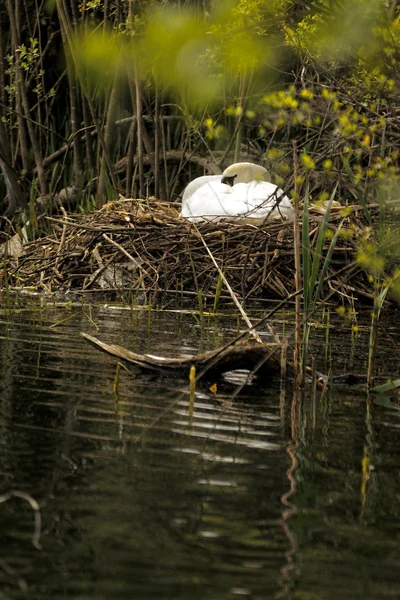
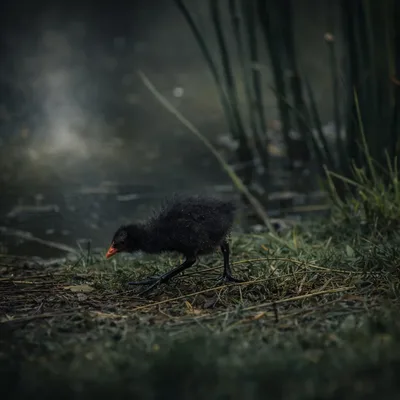
Six cygnets on the water, moving in the shadow of their parents. The pen leads. The cob maintains his vigil behind. A formation rehearsed and refined by instinct. It appears impenetrable.
It is not.
Mute swan cygnets — Cygnus olor — are precocial. From their first hours on water, they must forage. One pecks at the surface, testing an insect. Another dips beneath, learning depth and shadow. A third surfaces with a fragment of vegetation trailing from its bill. Duckweed, reed shoots, the tiny invertebrates that drift within reach of small bills. They are dabbling, diving, searching for whatever the water offers. They are learning to be swan.
The pen and cob cannot feed them directly, but they can bring food into reach. A long neck dipped to the bed lifts vegetation to the surface for small bills to take. Powerful webbed feet churn the silt, dredging invertebrates and softened weed within reach of the brood. It is not feeding. It is provisioning.
The first ten days
The first ten days are unforgiving. Foxes patrol the reeds at dusk and dawn. Herons and cormorants take their measure from above. Pike try to take what the shallows offer them — opportunists, seldom successful. A heron does not hesitate. A fox does not relent. The parents keep their watch, but there are limits to what vigilance can prevent. We see six now. Within a week, a fortnight for certain, we will count fewer.
Survival here is not a given. It is an outcome — earned incrementally against odds that do not seem to soften.
There is also the matter of timing. Mute swan clutches do not all hatch at once. The later cygnets enter the water already exhausted, already behind on the small reserves they were meant to bring with them. If a cygnet cannot feed adequately while led, it begins to fall back in the line. Falling back in the line is its own slow exposure.
The lie of the noble frame.
— Wilfred Owen
The protector reads the brood as well as the threats. The instinct that holds the family together also weighs it. What cannot keep up is not always carried. It is the least expected accounting on the water — the same vigilance that defends the brood is the same vigilance that prunes it.
What the water schools
This is the work of the first fortnight. The water schools and the water takes. The cygnets that come through it have learned to read shadow, to hold the line, to feed without being told. They have earned their place between the pen and the cob.
For now, six. The pen out front, the cob at the back. The reservoir holds them. The geometry holds them. They will be on this water until autumn.