It is just before the light gives out. The branches have gone black, the trunks have gone black, the background has gone black. And then — one warm sliver of sun catches a shoulder, and the whole animal appears out of the dark as if a lamp has been turned on behind him. A grey squirrel, balanced on a bough, holding something small and important in both hands. He is not watching me. He is too busy living.
What you actually see
Up close, the name is a lie. He isn't grey at all. He's silver along the spine, warm brown along the flanks, rust where the tail meets the body, and almost ivory where the belly catches the light. The tail itself is the wrong word for what it is — a banner, a rudder, a duvet, a semaphore. Half as long again as his body. It curls up behind him now, lit from within.
Look at the hands. That's where the animal lives. Five fingers, black pads, absurdly dextrous, turning whatever he's found over and over like a jeweller appraising a stone. Squirrels have partial colour vision and eyes set wide enough to see almost the full half-sphere behind them without turning their head. His ears are up. He has already clocked me. He has simply decided I am not important.
There is a detail you only notice when you are very close, or when the light is this low and this kind. The guard hairs along his back are tipped with a brighter silver, and when a draft moves through them the whole coat seems to ripple in the direction the wind is going. Like wheat. Like water. It is one of the loveliest things I have watched a wild animal do this year, and he is eating a scrap of something and does not know he is doing it.
"The guard hairs catch the last of the sun and ripple in the direction the wind is going. Like wheat. Like water."
Where, and how he got here
This squirrel is in Staffordshire because an Edwardian landowner thought a North American rodent would look charming in his grounds. He was not wrong about charming. He was wrong about everything else.
Grey squirrels — Sciurus carolinensis — are native to the eastern seaboard of America. The first documented British release was in Henbury Park, Cheshire, in 1876. Others followed at Woburn in the 1890s, and from there, into the great estates of the Midlands, and then — because nothing about a grey squirrel has ever been content to stay where it was put — everywhere. They are in every English county now. Every Welsh one. Most of Scotland. There are somewhere around two and a half million of them on these islands, and perhaps a hundred and forty thousand reds.
You will find them in woodland, parkland, city parks, your garden, your loft, the bird feeder you filled this morning and thought would last the week. They don't hibernate; in winter they dig up the acorns they buried in autumn, which they find by memory and smell, and bury again on a cold day just to be sure. They are planting oak trees while they do it. Hundreds of oaks that would never have existed without a squirrel who forgot where he put lunch.
The bigger picture — and the honest part
Here is the thing I keep coming back to.
This squirrel did not choose to be here. No individual grey squirrel ever has. He was born in a drey forty feet up in an English oak, to an English mother, on English soil, and he has never been anywhere else and never will. He is, in every way that matters to him, a British animal now. And I liked him, standing there in all that warm light, because he was beautiful and he was doing nothing wrong.
And yet. The reason you do not see a red squirrel in Staffordshire any more — the reason you have to go to Formby or Kielder or a Scottish pine forest to find one — is, in large part, this animal. Greys are bigger. They digest unripe acorns, which reds cannot. They outcompete the native species for food on every front, in every season. And they carry squirrelpox, a virus they are immune to and which kills a red squirrel in about two weeks. The greys are fine. The reds are not. That is not a political sentence. It is arithmetic.
This is not a post that is going to tell you how to feel about that. If you find grey squirrels charming — and you are allowed to, they are genuinely charming — then be charmed. If you find the absence of reds a quiet grief — and it is, if you let yourself sit with it — then sit with it. Both things are true at the same time and neither of them is this particular squirrel's fault. He is doing, with great competence, the only thing he was ever going to do.
What Britain does about this is not settled, and anyone who tells you it is has stopped thinking. What is actually here, in a Staffordshire wood in April 2026, in the last ten minutes of the afternoon light, is a grey squirrel — silver-backed and warm-flanked, holding something in both hands like it matters. And it does.
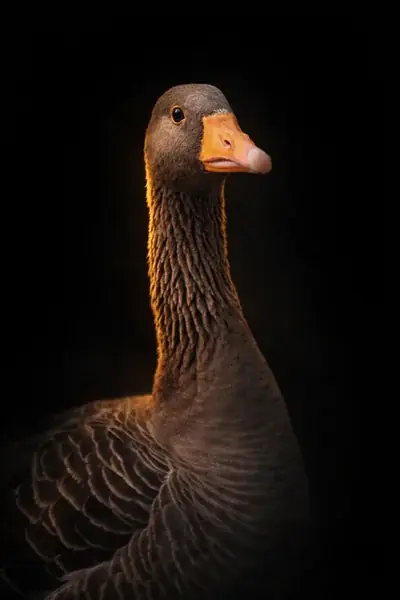
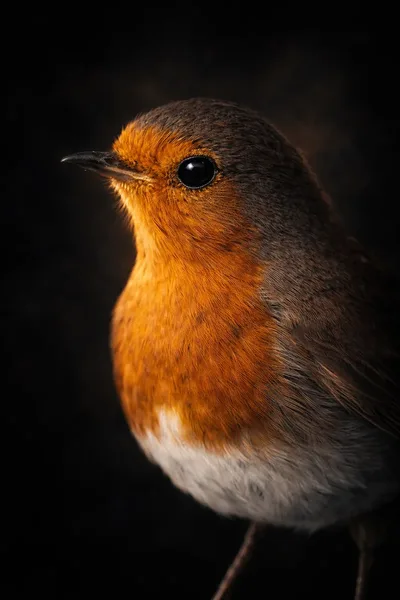
Next time you are in a wood, watch one for longer than you would normally bother to. Not to love him and not to resent him, but to see him clearly. That is the least we owe anything that is alive and in front of us. The reds will either come back, through the slow patient work of people trying to bring them back, or they won't. The greys, meanwhile, are here. They are extraordinary to look at. They are planting oaks. And once in a while, if you are standing in the right place when the sun is very low, one of them will glow — the same quiet gift that the robin gives you in the garden, and the grey-lag goose gives you at the water's edge.